


The Complete Guide to Choosing a 3D Printer: Selection Criteria that Even Beginners Can Easily Follow
3D printing technology has now gone beyond just a hobby and has become an essential tool in a variety of fields, including product design, prototyping, education, and art. However, when you try to purchase a 3D printer, you are at a loss as to which product to choose among the numerous types, specifications, and price ranges.
In this article, we will inform you of the key criteria and checklist for selecting a product so that even those who want to purchase a 3D printer for the first time can easily follow them.
1. The first question to ask is: "Why do I need it?"
Before choosing a printer, be sure to clarify your purpose for use. This one question alone can reduce your candidate base by more than half.
- For hobbies / education: Do you want a product that prints figures, props, simple models, etc. and is easy to maintain?
- Prototype / Work: Need to quickly create precise parts or functional samples?
- Art / Design: Need high-resolution, smooth surface results?
- Making functional parts: Do you make parts where durability and strength are important?
2. What if you choose an FDM printer? Must-check specifications
Details to check when choosing the most common FDM printer.
- Assembly Type Assembly Kit: Must be assembled yourself, but is inexpensive and helps understand printer structure. Assembled: Ready-to-use, suitable for beginners. The price is a little more expensive.
- Build Volume: The maximum printable size. If you don't plan on printing large items, too large a size may only take up unnecessary space.
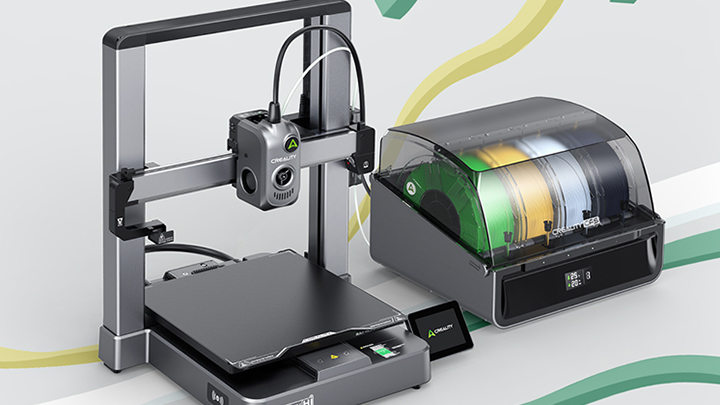
- Open vs Enclosed: Suitable for PLA filament use and inexpensive. Sealed type: Essential when printing highly shrinkable materials such as ABS and Nylon. Good for maintaining temperature and high safety (odor, fine dust).
- Bed Leveling Manual alignment: The price is cheap, but you have to turn the knob yourself to set it flat. Auto bed leveling (ABL): A very useful feature for beginners as the sensor automatically measures and corrects bed height.
- Nozzle: The default is 0.4mm. You can replace it with 0.2mm for small details and 0.6mm or more for fast output.
- Noise: Also check the noise level when using it at home or in the office.
3. Consider budget and maintenance costs
- Initial purchase cost: Don't just look at the printer body price.
- Incidental costs: Filament (material), bed adhesive / spray, replacement nozzle, tools, etc. Additional costs are incurred.
- Maintenance: FDM requires periodic management such as nozzle clogging and belt tightening. Think about whether you are willing to invest time and effort.
* * Checklist for easy choices * *
- What is your main purpose? (Hobby / Work (Precision) / Work (Intensity))
- What is your preferred output method? (FDM / SLA / Other)
- What is the budget? (Less than 500,000 won / 50NEPLHD1.5 million won / More than 1.5 million won)
- What is the approximate size of the object you want to print?
- Are you confident about assembling it? (Yes / No)
- Where are you going to install it? (Room / Office / Workroom) → Need to consider ventilation!
Finishing
For your first 3D printer, rather than finding the perfect product, it is important to choose the product that best suits your needs and skill level . For beginners, I recommend starting with a finished product model with good reviews and a community-enabled FDM method. Printing is a series of mistakes, but there is a lot to learn through the process.